


WHAT'S THE BUZZ AROUND YOUR HOME OR BUSINESS???
Arcing, Overheating & Fire Risk
We regularly encounter electrical panels that appear “normal” on the outside but contain hidden conditions that could easily lead to catastrophic equipment failure, fire, or serious injury.
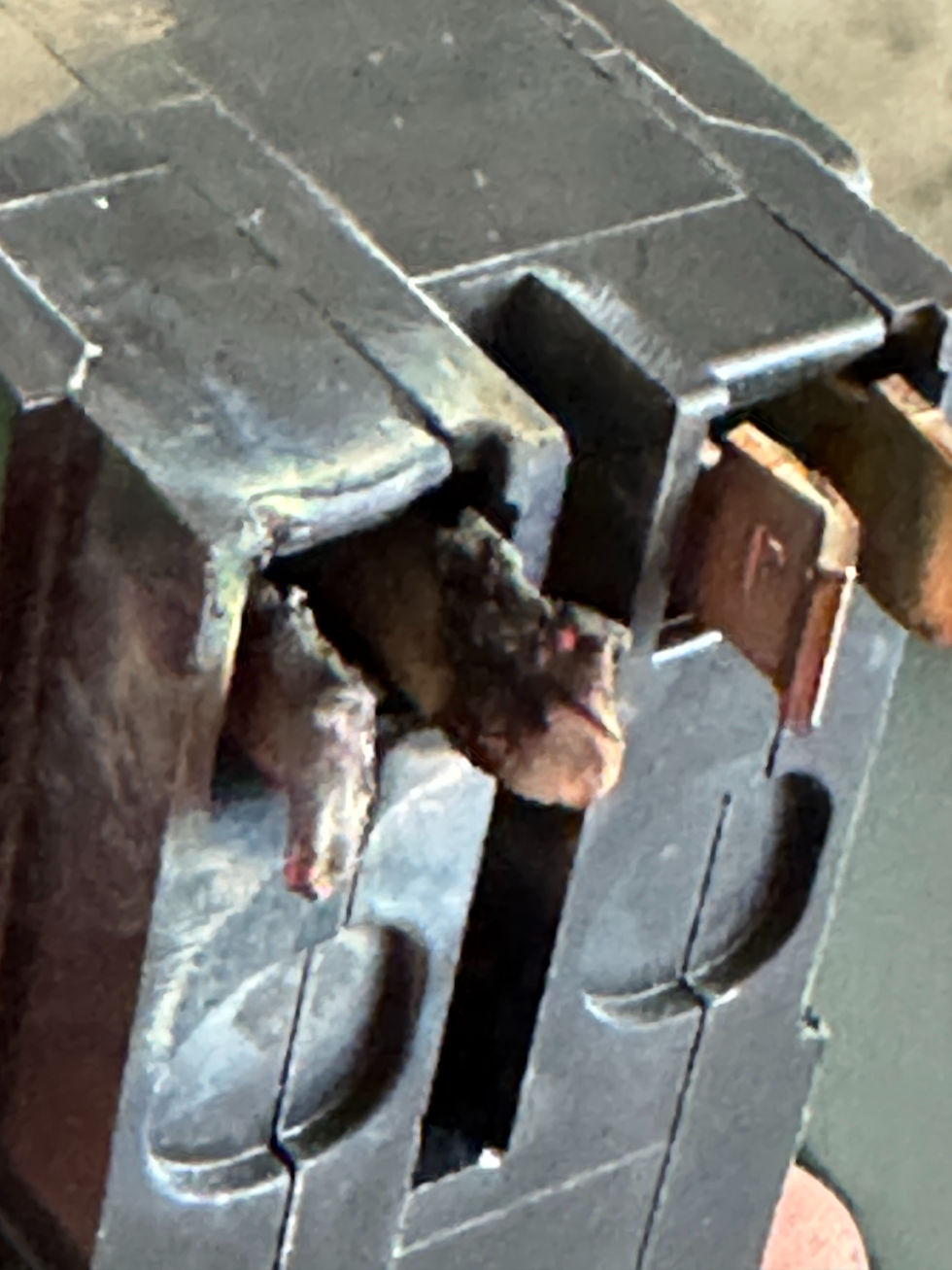
The photos below are from a recent field inspection that revealed the cause of the homeowner's sporadic buzzing/humming from their indoor power panel.


What Is Electrical Arcing?
Electrical arcing occurs when electricity jumps through the air between conductors or other electrical components instead of traveling cleanly along its intended path.
This can happen because of:
Loose breaker connections (as in this instance)
Corroded or oxidized terminals
Worn breaker stabs
Improperly torqued lugs
Overloaded circuits
Aging electrical equipment
Damaged bus bars
Moisture intrusion
Vibration or thermal cycling loosens connections over time
When arcing occurs, temperatures can rise extremely fast. Frequently, temperatures are hot enough to melt insulation, destroy breaker components, carbonize panel interiors, and ignite surrounding combustible materials.
What We Found in This Panel
The images from this inspection revealed several serious warning signs:
Evidence of Progressive Heat Damage
The breaker housing showed charring, melting, and discoloration consistent with prolonged overheating.
This was not an instantaneous failure—it developed gradually over time. This is one of the greatest dangers of electrical arcing: many failures develop silently and invisibly until smoke, fire, or catastrophic failure finally occurs.
Damaged Bus Bar
The panel bus bar itself exhibited clear evidence of arcing and thermal destruction.
Once a bus bar has been damaged in this manner, simply replacing the breaker is often insufficient to remedy this situation.
Common Warning Signs Homeowners and Facility Managers Ignore
Many dangerous electrical conditions give warning signs long before failure occurs.
Pay attention if you notice:
Flickering or dimming lights
Buzzing or crackling sounds near panels
Warm breakers or panel covers
A burning or “hot electrical” smell
Frequent breaker tripping
Discolored breakers or panel interiors
Scorch marks
Intermittent power loss
Breakers that feel loose
Older panels struggling with modern loads
Industry-Recognized Recommendations for Prevention
1. Schedule Periodic Electrical Inspections
Older homes, commercial buildings, HOAs, industrial facilities, and marina/pool infrastructure should undergo periodic inspections by qualified electrical professionals.
This is especially important for:
Panels over 20–30 years old
Aluminum branch wiring systems
High-load equipment
Coastal environments
Facilities with vibration or moisture exposure
2. Most Effective Inspections Include:
Infrared thermography is one of the best ways to detect loose or overheating connections before catastrophic failure occurs.
Load analysis and load balancing of the power panel.
Inspection of terminations for proper torque, which would include:
Breaker terminals
Lugs
Neutral bars
Ground bars
Improper tightening—or simply “hand-tightening”—can create dangerous high-resistance connections over time.
3. Upgrade Aging Electrical Panels
Many older panels were never designed for today’s electrical demands:
EV chargers
HVAC upgrades
Tankless water heaters
Large appliances
Home offices
Electronics
When to Call an Electrician Immediately
If you notice ANY of the following:
Burning smell
Buzzing from a power panel
Smoke
Scorch marks
Warm or hot breakers
Flickering lights
Crackling sounds
Melted insulation
These are emergency warning signs that require immediate professional evaluation.
Final Thoughts
Many electrical failures develop slowly through the years when connections heat and cool repeatedly, thus loosening occurs sight unseen. This type of unseen danger is the cause of many fires.
Preventive inspection and maintenance are far less expensive than the cost of recovering from a catastrophic electrical failure or a fire.
Need an Electrical Safety Inspection?
North Brunswick Electrical Contractors, Inc. provides professional electrical troubleshooting, panel inspections, thermal diagnostics, repairs, and upgrades throughout southeastern North Carolina.
Serving:
Wilmington
Leland
Brunswick County
New Hanover County
surrounding coastal communities
Contact us today to schedule an inspection before hidden electrical damage becomes a fire hazard.


Comments