


Salt Air, Humidity, and Electrical Equipment: Why Coastal Properties Need More Than an Occasional Look
Here in southeastern North Carolina, we live in a beautiful place. The same coastal environment that makes our beaches, marshes, and waterways so appealing is also very hard on electrical equipment.
Salt air, high humidity, wind-driven rain, summer heat, and constant condensation all work against outdoor electrical gear. Meter centers, breakers, disconnects, pull-out switches, service equipment, panels, and junction boxes may look acceptable from a distance, but the real story is often found once the covers are opened.
The attached photos are a good example. From the outside, some of the equipment still looks like ordinary aging service gear. But closer inspection reveals rusted enclosure seams, deteriorated hardware, corrosion around meter sockets, weathered breaker handles, and severely corroded internal components. In coastal environments, this kind of deterioration is not unusual.
What the Coastal Environment Does to Electrical Equipment
Electrical equipment is designed to operate safely when it is properly installed, properly maintained, and kept within its intended environmental limits. Along the coast, those limits are challenged every day.
Salt-laden air settles on metal surfaces and accelerates corrosion. Humidity allows that salt contamination to remain active. Wind-driven rain can enter worn or poorly sealed enclosures. Heat causes expansion and contraction. Over time, gaskets dry out, covers warp, screws rust, labels fade, and internal connections can become compromised.
The result is more than cosmetic rust.
Corrosion can affect breaker mechanisms, meter sockets, lugs, bus connections, grounding components, and enclosure integrity. Once corrosion begins inside service equipment, it often continues unseen until there is a failure, nuisance outage, hot connection, arcing condition, or emergency repair.
What These Photos Show
These pictures show several common problems we see in coastal electrical service equipment:
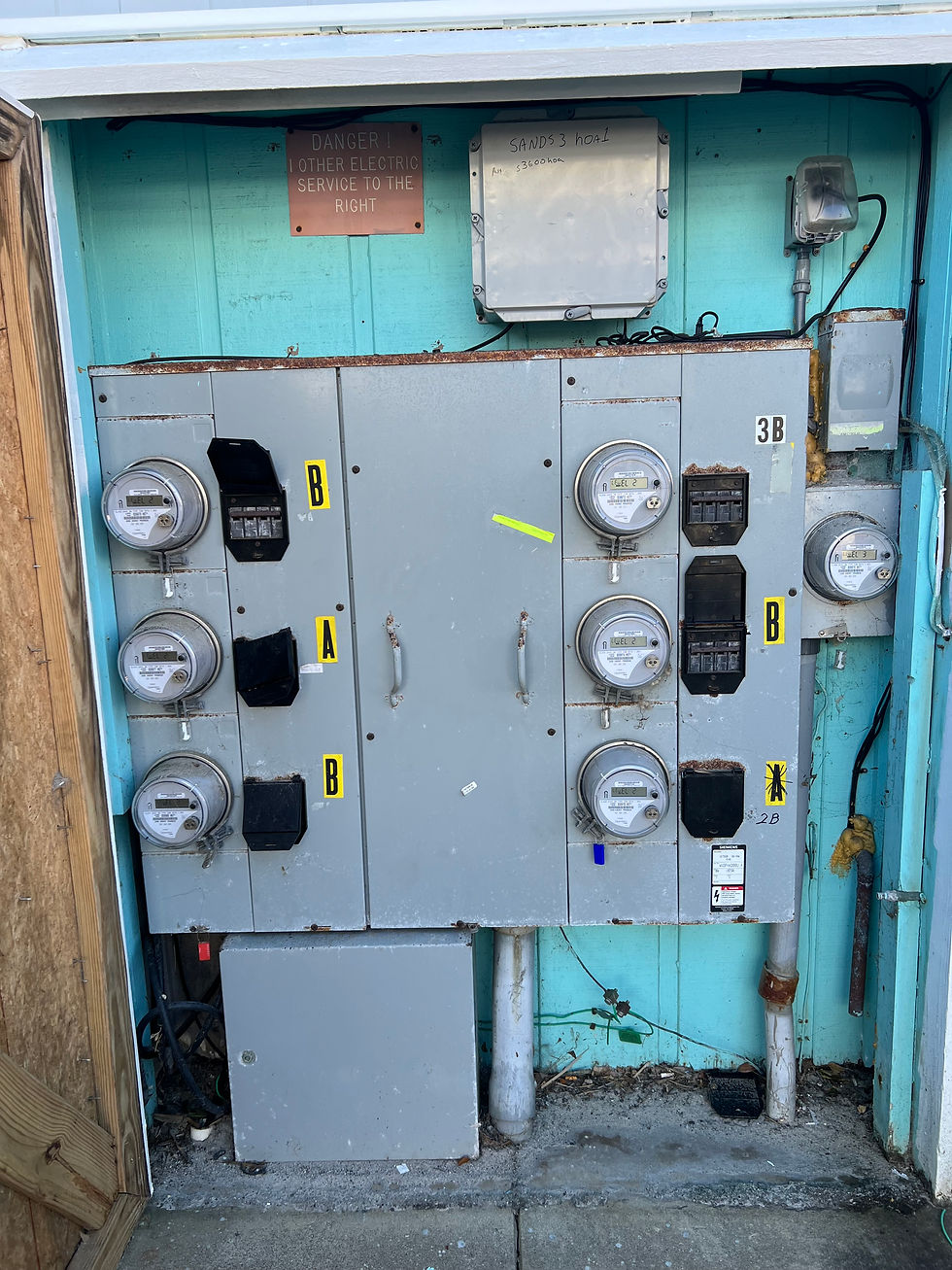
Rusted meter centers and service enclosures
The exterior rust along the tops, seams, and around covers suggests long-term exposure to moisture and salt air. Once corrosion reaches seams and fasteners, the enclosure may no longer protect the equipment inside as intended.

Corroded breaker handles and internal parts
The close-up photos show heavy corrosion on breaker operating handles and exposed metal parts. A breaker is not just a switch; it is a protective device. If its mechanism is deteriorated, it may not operate reliably when needed.


Moisture intrusion and aging equipment
Rust staining around meter sockets, covers, and conduits is often a sign that water has been present repeatedly. Even when the equipment still works, water intrusion shortens its service life.
Service equipment exposed to harsh conditions
Multifamily buildings, beach houses, clubhouses, marinas, and properties near the Intracoastal Waterway are especially vulnerable. Equipment mounted outdoors or beneath elevated structures is constantly exposed to damp air, wind, sand, and salt.
Why “It Still Works” Is Not Good Enough
One of the most common mistakes property owners make is assuming that electrical equipment is safe simply because the power is still on. That is not always true.
A corroded breaker may still pass current. A deteriorated meter socket may still serve the load. A loose or oxidized connection may still work until it heats under demand. The danger is that the failure may occur suddenly, and often at the worst possible time—during peak summer load, after a storm, during a rental turnover, or when multiple tenants are relying on the same equipment.
Electrical failures in coastal service equipment can lead to:
Reduced reliability
Nuisance tripping or unexplained outages
Overheating connections
Damaged breakers or meter sockets
Loss of power to tenants or equipment
Emergency repair costs
Potential fire hazards
Insurance and liability concerns
Coastal Electrical Maintenance Should Be Preventive
For coastal properties, electrical maintenance should not be limited to responding after something fails. Outdoor service equipment should be inspected periodically by a qualified electrical contractor, especially when the equipment is older, visibly rusted, located near salt water, or serving multiple tenants.
A proper inspection may include:
Checking enclosure condition, rust, seams, covers, and fasteners
Looking for evidence of water intrusion
Inspecting breaker condition and operation
Checking meter socket condition where accessible and permitted
Verifying grounding and bonding components
Looking for overheated or discolored conductors
Checking for loose, corroded, or deteriorated terminations
Confirming that equipment remains properly labeled
Identifying obsolete or difficult-to-source components
Recommending repair or replacement before failure occurs
When Replacement Makes More Sense Than Repair
In some cases, minor repairs may be enough. A damaged cover, missing hardware, failed gasket, or deteriorated hub may be correctable.

But when corrosion has reached the internal components of breakers, meter sockets, bussing, or service disconnects, replacement is often the wiser and safer choice. Cleaning rust from the outside does not restore the listing, reliability, or mechanical integrity of electrical equipment. In coastal work, there is an important difference between making something look better and making it safe and reliable.
Better Materials and Better Planning Help
No outdoor electrical installation lasts forever in a coastal environment, but better planning can extend service life. Depending on the location and application, that may mean using better-rated enclosures, stainless or corrosion-resistant hardware, improved sealing methods, proper drainage, better mounting locations, drip protection, and more thoughtful equipment layout.
Just as important, property owners should plan for replacement before equipment reaches the point of emergency failure. This is especially true for condominiums, rental properties, HOA facilities, beach homes, and commercial buildings where an outage affects multiple people.
The Bottom Line
Southeastern North Carolina’s coastal environment is beautiful, but it is unforgiving to electrical equipment.
Salt air, humidity, heat, and wind-driven rain slowly attack metal enclosures, breakers, meter sockets, disconnects, and connections. By the time deterioration is obvious from the outside, the inside may already be in poor condition.
If your property is near the ocean, the Intracoastal Waterway, marshland, or any salt-air environment, now is a good time to have your outdoor electrical equipment inspected. Preventive attention today can help avoid unsafe conditions, costly failures, and emergency repairs tomorrow.
North Brunswick Electrical Contractors, Inc., can inspect coastal electrical service equipment, identify corrosion-related concerns, and recommend practical repair or replacement options before small problems become major failures. Call us today at 910-371-3369 to schedule an inspection, or email us at info@nbec-us.com


Comments